Video conferencing equipment for hybrid and remote teams isn't about buying a better camera — it's about the network, the power, and the licensing that keep every call connected in 2026.
- Equipamento videoconferência empresas starts with Wi-Fi and switches, not cameras — buy business-grade gear first.
- Office Wi-Fi networks handle concurrent HD calls; consumer routers stall past a handful of simultaneous users.
- UPS backup power keeps calls running through outages — skip it and one blackout kills a client meeting.
- Microsoft 365 with Teams covers most hybrid teams; skip it only if already committed to Zoom or Slack.
- PoE network switches power access points and conference devices from one cable — buy before adding rooms in 2026.
Why this matters
Hybrid teams live on video calls, and the piece of equipment that fails first is almost never the camera. A laptop webcam works fine until the Wi-Fi drops mid-sentence or the switch feeding the conference room chokes on three simultaneous streams.
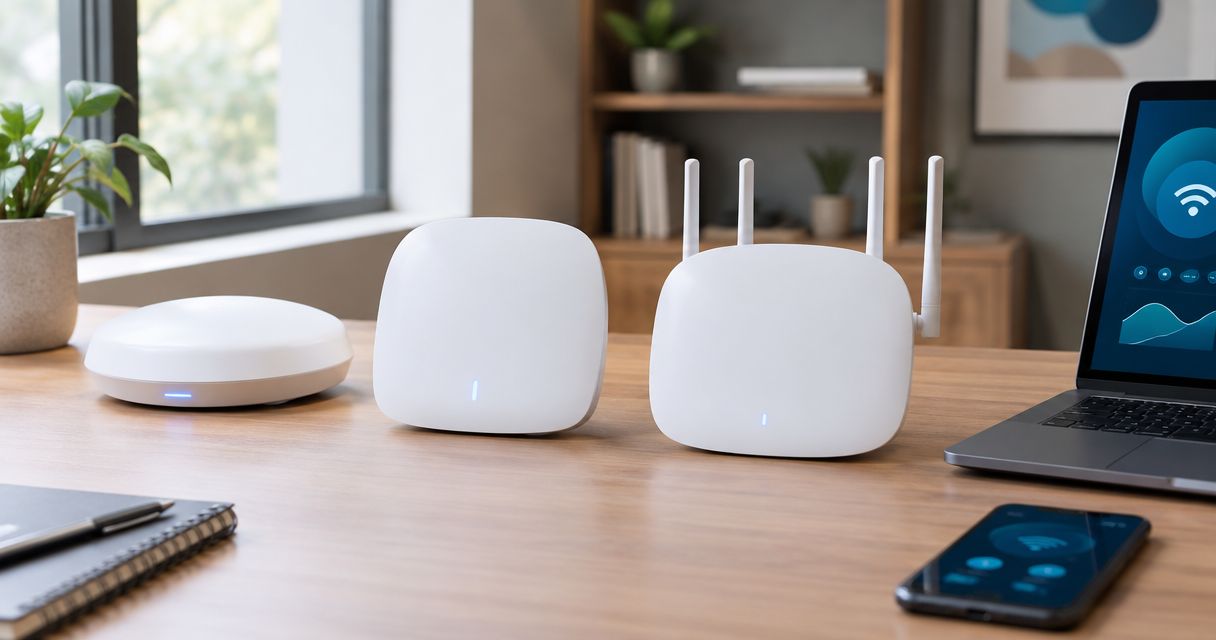
For companies buying equipamento videoconferência empresas in 2026, Voll's catalog splits the real budget into three categories: the office Wi-Fi network built for small businesses that carries the call, the switch that feeds power to the access point, and the Microsoft 365 licensing that puts Teams on every laptop.
Get those three right and any decent camera looks good on the other end. Get them wrong and no amount of camera money fixes a call that freezes every four minutes.
“No amount of camera money fixes a call that freezes every four minutes.”
Who this is for
This guide is for IT managers and office admins at Portuguese SMEs running hybrid or remote teams — companies with 10 to 200 employees where video calls happen daily across sales, support, and management. If your team runs client calls, board meetings, or cross-location coordination over Teams or Zoom, and the office still runs the router that came bundled with the internet contract, this is the equipment audit to run before Q1 2026 budget close.
What to look for in equipamento videoconferência empresas
Wi-Fi capacity for concurrent calls
Microsoft's own guidance for Teams calls sets the bar at roughly 1.2 Mbps up and down per participant for HD video, and that number multiplies fast once three conference rooms are on calls at once. A consumer router built for a home office chokes well before it handles ten concurrent HD streams. Business-grade Wi-Fi with proper access point placement is the single upgrade that fixes the most complaints.
PoE switch capacity
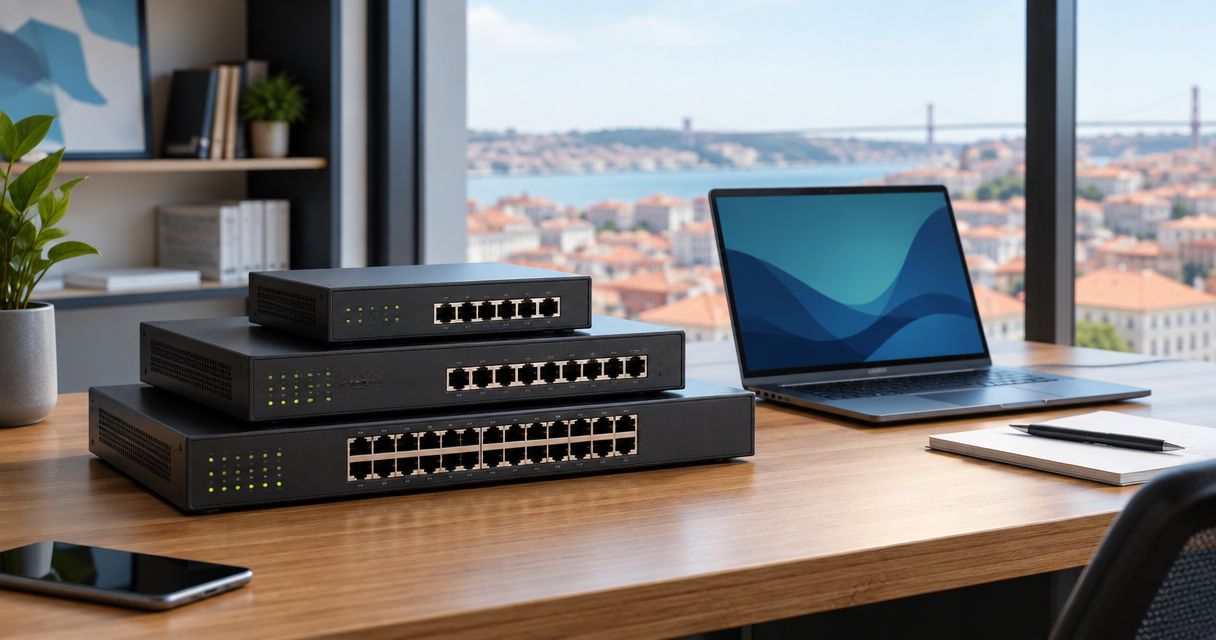
Every access point, IP camera, or conference speakerphone running on Power over Ethernet needs a switch that can actually deliver it. The 802.3at standard pushes up to 30W per port, and an office adding two or three conference rooms in 2026 runs out of PoE budget on an old 8-port switch fast. Undersized switches are the quiet reason new access points never reach full power.
Power continuity
A blackout mid-meeting doesn't just drop the call — it drops the router, the switch, and the whole floor's connectivity at once. UPS backup power sized for the network rack keeps calls alive through short outages and gives equipment a clean shutdown during long ones. Skipping this line item is the most common false economy in hybrid-office setups.
Licensing that matches how the team already works
Video conferencing lives inside whatever collaboration suite the company already runs, and buying network hardware before settling that question wastes money. Teams comes bundled with most Microsoft 365 business plans, but teams already standardized on Zoom or Slack don't need to pay for a feature they won't use. Settle the licensing decision before the network gets rebuilt around it.
Multi-location connectivity
Companies running more than one office or store need calls and file access to work the same way at every location, which means the network has to connect sites, not just cover one building. A VPN link between locations keeps video calls, shared drives, and internal tools consistent whether someone dials in from headquarters or a branch office.
Top picks
Voll stocks business-grade Wi-Fi, PoE switches, and UPS hardware for exactly this kind of office refresh — here's what to prioritize first.
1. Business-grade Wi-Fi — the foundation pick
Wi-Fi built for offices, not homes, is where video call quality actually gets decided. An office Wi-Fi network built for small businesses covers a floor with dedicated access points instead of one router straining to reach the far conference room. One access point per 150-200 square meters is the rule of thumb installers use for consistent coverage. Verdict: Buy — this is the first thing to fix before anything else on this list.
2. PoE network switches — the pick most offices skip
Switches don't get budget attention until an access point won't power on, and by then a meeting already dropped. Network switches for growing offices with enough PoE ports mean every new access point, camera, or conference phone gets power and data from one cable. An office adding a third conference room in 2026 needs the PoE budget calculated before buying more access points, not after. Verdict: Buy if adding rooms or devices this year — Consider if the current switch still has spare PoE ports.
3. UPS backup power — the insurance pick
Nobody budgets for a UPS until the first outage kills a client call. UPS systems for server rooms and network racks keep the router, switch, and access points running through short outages and shut everything down cleanly during long ones. A rack-mounted unit sized to the actual network load, not the whole office, covers most hybrid setups. Verdict: Buy — the cost of one missed client call outweighs the hardware.
4. Microsoft 365 with Teams — the licensing pick
The camera and microphone are useless without a collaboration platform behind them, and Teams ships inside most Microsoft 365 business plans already. Teams handles chat, file sharing, and video calling in one license instead of stacking separate tools on top of the network spend above. Verdict: Buy for teams standardizing on Microsoft's stack — Skip and keep the current setup if the company already runs Zoom or Slack and has no plan to migrate.
Get a network audit quote
See what your office needs before the next outage or dropped call.
What to avoid
- Consumer mesh Wi-Fi systems. Marketed for offices lately, but built for streaming in a living room, not ten concurrent Teams calls with PoE-powered devices attached.
- Buying a switch by port count alone. A 24-port switch with no PoE budget left doesn't help when the new access point can't power on.
- Skipping the UPS to save on the invoice. It's the cheapest line item on this list and the one that saves an entire meeting when the power blinks.
Verdict comparison table
| Equipment | What it does | Key number | Verdict |
|---|---|---|---|
| Business Wi-Fi network | Carries HD video to every room | 1.2 Mbps per call (Teams guidance) | Buy |
| PoE network switch | Powers access points and conference devices | 30W per port, 802.3at | Buy |
| UPS for network rack | Keeps calls alive through outages | 24-48h delivery once ordered | Buy |
| Microsoft 365 with Teams | Runs the call software itself | Bundled in most business plans | Buy, unless already on Zoom or Slack |
| Multi-site VPN | Connects branch offices to HQ | N/A | Consider for 2+ locations |
FAQ
What equipment do I actually need for video conferencing in a hybrid office?
Business-grade Wi-Fi, a PoE switch, and UPS backup power matter more than the camera itself. Get those three right and any reasonable webcam or laptop camera performs well on the other end.
Is a consumer router enough for office video calls?
No, a consumer router stalls well before it handles several concurrent HD calls. Business-grade access points with proper placement fix most call-quality complaints in an office.
Do I need Microsoft Teams if my team already uses Zoom?
No, Microsoft 365 plans exist without Teams for companies already standardized on Zoom or Slack. Paying for a feature the team won't use just adds unnecessary licensing cost.
How much bandwidth does a video call need?
Microsoft's guidance for Teams calls is roughly 1.2 Mbps up and down per participant for HD video. That number scales with every additional person or conference room on a call at once.
What is PoE and why does it matter for conference rooms?
Power over Ethernet delivers electricity and data through one network cable, powering access points and conference devices without a separate power outlet. The 802.3at standard delivers up to 30W per port, which matters once a room adds a camera or speakerphone.
Do I need a UPS for office video conferencing equipment?
Yes, a UPS keeps the router, switch, and access points running through short power outages so calls don't drop instantly. It also allows a clean shutdown during longer outages, protecting the hardware.
How fast can I get networking equipment delivered in Portugal?
Voll delivers networking and UPS equipment across Portugal in 24-48h once an order is confirmed. That covers Wi-Fi access points, PoE switches, and UPS units for network racks.
Should I buy Wi-Fi 6 equipment in 2026?
Yes, Wi-Fi 6 is the standard for new business installs in 2026 and handles more concurrent devices per access point than older Wi-Fi 5 hardware. Offices adding conference rooms or more staff benefit most from the upgrade.
One last thing
The most expensive video conferencing setups in 2026 still fail on the same thing: an office running a router bought years ago, feeding a switch with zero PoE budget left. Fix the wiring closet before the meeting room, and the cheapest webcam on the desk works fine.