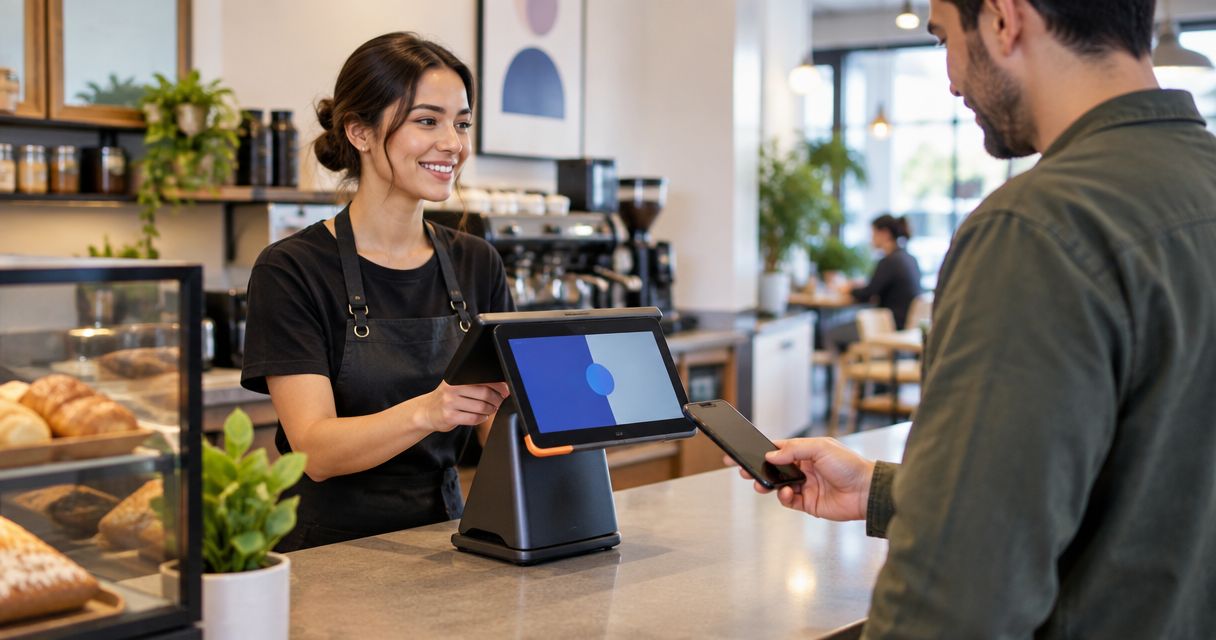
Best overall in 2026: a fixed-counter SUNMI POS terminal for a permanent retail checkout. Best for tableside service and mobile selling: a SUNMI handheld terminal. VOLL is the best fit for a Portuguese business that needs SUNMI hardware considered alongside POS software, ERP integration and local support; confirm the exact device and software combination before ordering.
- A fixed-counter SUNMI POS terminal is the default choice for a permanent retail checkout in 2026.
- A SUNMI handheld terminal suits tableside service, delivery handovers and selling away from a counter.
- VOLL can discuss SUNMI hardware alongside WINTOUCH POS/ERP software, installation and ERP integration.
- Confirm software, peripherals and network requirements for the exact device before committing.
Why this matters
A POS terminal is where staff carry out the sale, but the device alone does not define the checkout. Your software, payment arrangement, receipt process and stock workflow determine whether the setup works at the counter or on the move. Picking a format before checking those dependencies creates avoidable changes during installation.
This 2026 comparison ranks terminal formats, not individual SUNMI models. The supplied information identifies SUNMI POS hardware and handheld use cases but does not establish a model-by-model catalogue, specifications or compatibility list. That distinction matters: a sensible format recommendation is not proof that a particular device runs your chosen software or connects to your existing equipment.
If you need help defining the full setup, VOLL sells business IT equipment and WINTOUCH POS/ERP software, with installation, ERP integration and local support among its stated services. Ask for the intended software and workflow to be checked against the exact hardware you intend to use.
What makes the best SUNMI POS terminal?
Use these criteria before comparing devices. Each addresses a decision that can change the format you need.
- Checkout position: Does each sale happen at a fixed counter, beside a table or wherever the customer is standing? Start with where staff work, not the shape of a screen.
- Software fit: Name the POS application and the tasks staff must complete. Verify support for the specific SUNMI device rather than treating the brand name as a compatibility guarantee.
- Peripheral needs: List receipt printers, barcode scanners, cash drawers and any other equipment the workflow requires. Establish how each item connects before selecting the terminal.
- Network resilience: Identify where orders must be entered and how the software handles a connection interruption. Device mobility does not remove the need for a workable network plan.
- Staff handoff: Decide whether the device stays at an assigned station or moves between employees. That choice affects charging, access control and responsibility for the terminal.
- Back-office flow: Map what must reach invoicing, stock management or ERP after the sale. Confirm the data flow in the software configuration, not from the terminal's appearance.
The criteria have a clear order for 2026: settle the checkout position first, then check software and peripherals. A device that fits the counter but not the required sales process is the wrong device.
SUNMI POS terminals at a glance
| Terminal format | Best for | Standout feature | Key limitation |
|---|---|---|---|
| Fixed-counter SUNMI POS terminal | Permanent retail checkout | A dedicated position for staff and connected checkout equipment | Does not follow staff onto the shop floor or between tables |
| SUNMI handheld terminal | Tableside service and mobile selling | Staff can carry the sales interface to the customer | Peripheral access, charging and connectivity need a separate plan |
Choose the fixed-counter format by default when customers come to one checkout. Choose handheld when the sale or order must begin away from that counter. Neither format establishes payment acceptance, receipt printing or software support on its own; those depend on the exact configuration.
1. Fixed-counter SUNMI POS terminal: best for permanent retail checkout
A fixed-counter SUNMI POS terminal gives a shop a defined place to complete sales. It is the clearest choice when staff serve customers at one checkout and need their supporting equipment close to that station. For a bakery, boutique or small retailer, first map the actual counter routine: identify where the sale starts, where it ends and which devices staff touch between those points.
A fixed position also makes the software discussion more precise. You can specify the POS workflow, receipt process, scanning requirements and back-office records before choosing hardware. Do not assume that every SUNMI terminal supports the same connections or that any POS application will run on every model. Get confirmation for the proposed device and configuration.
Fixed-counter SUNMI POS terminal pros:
- Gives staff and customers a consistent checkout location.
- Makes it straightforward to plan the placement of counter equipment.
- Suits stores where scanning, receipts or a cash drawer are part of a stationary workflow.
- Provides a clear starting point for documenting installation and staff routines.
Fixed-counter SUNMI POS terminal cons:
- Does not put the sales interface beside a restaurant table or out on a shop floor.
- Requires counter space and a plan for its connected equipment.
- Does not settle software or peripheral compatibility without an exact model and configuration.
Best for: A business with a permanent staffed checkout and a sales process built around that counter.
Verdict: Buy the fixed-counter format when transactions consistently finish at one station and the exact hardware has been checked against the required software and peripherals. Hold if you have not documented those requirements. In 2026, a stable counter workflow is a better reason to choose this format than a preference for a particular screen shape.
2. SUNMI handheld terminal: best for tableside and mobile selling
A SUNMI handheld terminal fits work that moves with the employee. In hospitality, that can mean taking an order beside a table rather than returning to a fixed station to enter it. In retail, it can mean starting a sale away from the main counter. The advantage is the working position; the checks are what happens after staff enter the order.
Trace the entire transaction before selecting a handheld. Where does the order appear next? How is a receipt produced if one is needed? What happens when the worker returns the device, and where does it charge? Those are workflow questions, not features to assume from the word handheld.
SUNMI handheld terminal pros:
- Puts the sales or ordering interface with the employee as they move.
- Suits service at a table or other location away from a checkout counter.
- Can form part of a workflow in which orders start away from a fixed station.
SUNMI handheld terminal cons:
- Needs a plan for charging and staff handoffs.
- Requires connectivity checks wherever staff will use it.
- May still depend on separately planned receipt, payment or back-office processes.
Best for: A business whose staff need to start orders or sales beside customers rather than at a permanent checkout.
Verdict: Buy the handheld format when mobility is essential to the service workflow and the exact device, software and downstream process have been confirmed. Skip it as a default replacement for a stationary checkout when staff do not need to move. A smaller device is not automatically a simpler POS installation.
How we ranked the formats
The ranking follows checkout position, then software fit, peripheral needs, network planning, staff handoff and back-office flow. A fixed-counter terminal comes first because it answers the permanent-checkout use case directly; a handheld takes the distinct mobile-service slot. This is a decision framework for 2026, not a performance test or a model-specific product ranking.
No price-based or budget winner is named. The available information does not identify exact SUNMI models or comparable configurations, so ranking them on hardware performance would turn assumptions into buying advice. Confirm the proposed equipment before treating either format as a final specification.
Check the complete POS workflow before ordering
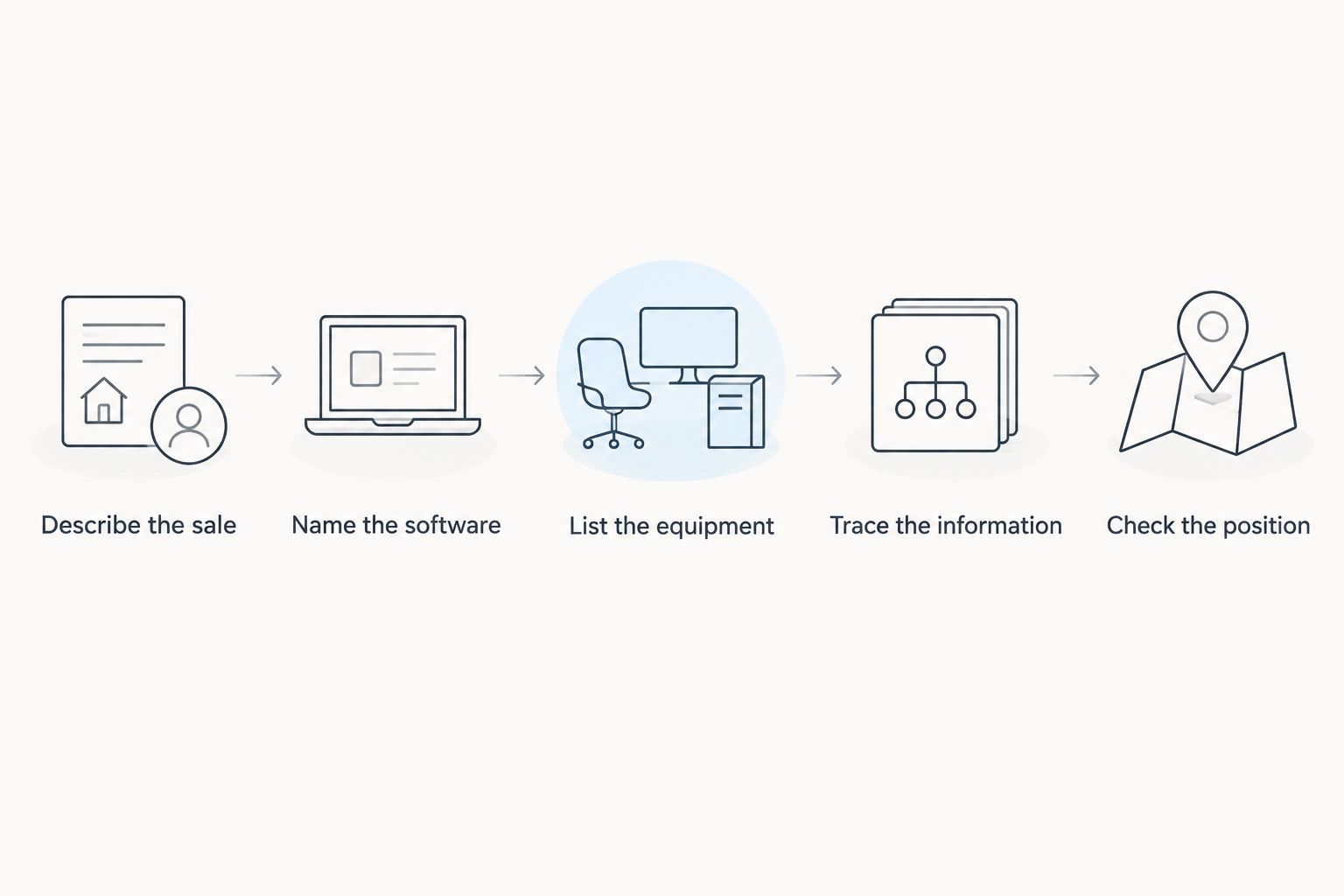
A terminal decision becomes useful when you can describe what happens from the first customer action to the back-office record. Use this sequence with whoever supplies or configures your POS system:
- Describe the sale. State whether customers order at a counter, at a table or while staff move around the premises. Note where the transaction must finish.
- Name the software. Identify the POS application you plan to run and ask for confirmation against the exact device under consideration.
- List the equipment. Include the printer, scanner, drawer and other devices the process requires. Confirm each necessary connection for the proposed setup.
- Trace the information. Specify which sales, stock and invoicing records need to reach other systems, and how that transfer will be configured.
- Check the operating position. Test the network and staff routine where the device will actually be used, not only where it will be installed.
VOLL lists more than 200 WINTOUCH POS/ERP products in its catalogue and identifies installation, ERP integration and local support as points of difference. That makes a discussion about the complete workflow more useful than requesting a SUNMI POS terminal by brand alone. State whether the intended back-office system is Primavera/Cegid and ask how the proposed POS configuration handles the required data.
The supplier's stated delivery window is 24–48 hours across Portugal. Treat that as a delivery detail, not evidence that a particular device and software combination is ready to deploy without configuration. Before ordering in 2026, establish what equipment is being supplied and what installation work your operation needs.
Which SUNMI POS terminal should you choose?
Choose a fixed-counter SUNMI POS terminal for a permanent checkout. It is the default for a retailer whose staff finish sales at one station and need counter equipment within reach. Choose a SUNMI handheld terminal instead when tableside ordering or mobile selling is an operating requirement, not simply a desirable extra.
If your operation needs both positions, do not force the whole workflow into one device format. Describe each point where an order starts and finishes, then check whether the proposed software can support the arrangement. That question belongs in the 2026 buying decision before any individual model is selected.
FAQ
What is the best SUNMI POS terminal for a small retail shop in 2026?
A fixed-counter SUNMI POS terminal is the best starting format when sales finish at a permanent checkout. Confirm the exact device against your POS software and connected equipment before ordering.
Is a SUNMI handheld terminal better than a fixed-counter terminal for restaurants?
A SUNMI handheld terminal is better when staff must enter orders beside customers. A fixed-counter terminal fits ordering and checkout at a permanent station; choose according to where staff actually work.
Can any WINTOUCH POS license run on any SUNMI terminal?
Do not assume compatibility between a WINTOUCH POS license and every SUNMI terminal. Ask for confirmation of the exact software, device and required functions in the proposed setup.
Do SUNMI POS terminals include payment processing?
A SUNMI POS terminal choice does not, by itself, establish how your business will accept payments. Confirm the payment arrangement for the exact hardware and software configuration.
What equipment should I check before buying a SUNMI POS terminal?
Check every device your checkout requires, including relevant printers, scanners and cash drawers. Confirm the necessary connections against the exact terminal rather than assuming all models support them.
Which SUNMI format suits tableside ordering?
A SUNMI handheld terminal suits staff who need to enter orders beside restaurant tables. Check network coverage, charging and what happens to the order after entry.
Should I choose the SUNMI terminal before selecting POS software?
Choose the workflow and software requirements before committing to a specific SUNMI terminal. The final hardware choice must support the functions your staff and back office need.
One last thing
A handheld can move the start of a sale without moving every other part of the transaction. In 2026, ask where an order is entered, where it is completed and where its records must go. Those answers tell you whether you need a counter terminal, a handheld or a planned combination.


